

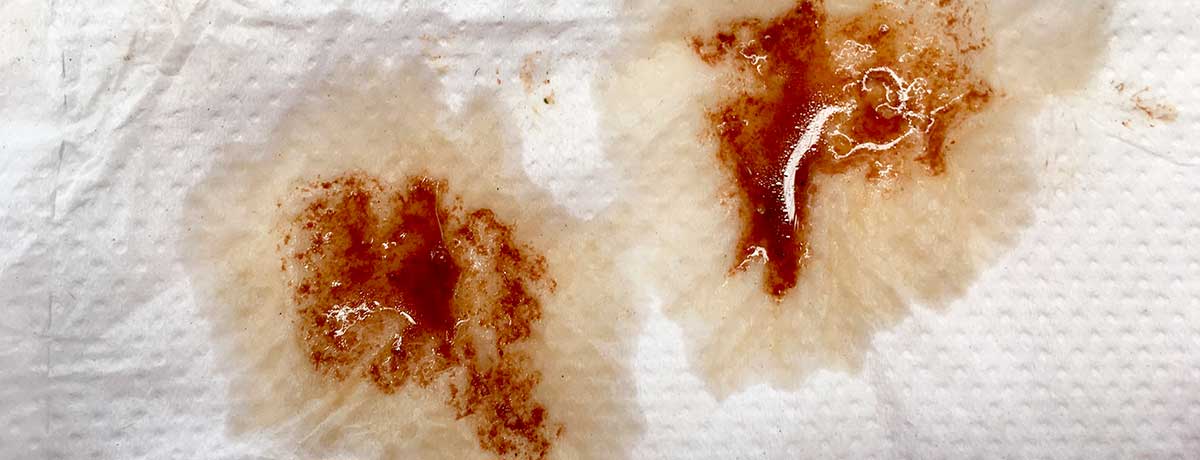
Brown vaginal discharge is one of those things that tends to trigger immediate anxiety—but in most cases, it’s not a cause for alarm. If you are wondering what does brown discharge mean, the answer usually lies in the timing. The brown color comes from old blood that has taken longer to exit the uterus and has oxidized (changed color from red to brown) along the way. The real question is: why is there blood there in the first place?
Brown discharge most commonly means old menstrual blood leaving the body just before or after a period, implantation bleeding in early pregnancy, or spotting related to hormonal fluctuations (like during ovulation). Less commonly, it can signal an infection, cervical issues, or other underlying conditions that require medical attention.
Why Is It Brown Instead of Red?
Fresh blood is red. As blood ages and oxidizes – meaning it’s been sitting in the vaginal canal for a while before exiting – it turns brown, then dark brown, and sometimes almost black. The color alone tells you the bleeding is old, not active and acute.
This is why brown discharge is typically less urgent than bright red spotting, though both deserve attention when they occur outside of a normal period.
Common Causes of Brown Discharge
Before or After Your Period
The most common scenario. In the days before your period starts, old blood from the last cycle may still be clearing. At the end of a period, the flow slows and blood oxidizes before leaving – turning dark brown or almost black.
This is completely normal and needs no treatment.
Implantation Bleeding
When a fertilized egg implants into the uterine wall (around 6-12 days after conception), it can cause minor bleeding – often described as light pink or brown spotting. It’s usually:
- Much lighter than a period
- Lasts 1-3 days (not a full flow)
- Occurs before an expected period
- May be accompanied by mild cramps
If there’s a possibility of pregnancy and you notice this, take a pregnancy test.
Hormonal Contraceptives
Starting a new birth control pill, patch, or IUD often causes breakthrough spotting – including brown discharge – for the first few months as the body adjusts. This is very common and typically resolves within 3 cycles.
Ovulation Spotting
Some women notice light spotting or pink/brown discharge at mid-cycle, around ovulation. This is caused by the small drop in estrogen that occurs when the follicle ruptures to release the egg.
Perimenopause
As hormone levels fluctuate in the years leading up to menopause, periods become irregular. Brown spotting between cycles is a hallmark of perimenopause, especially in women in their 40s.
Polycystic Ovary Syndrome (PCOS)
Irregular ovulation in PCOS leads to unpredictable periods and spotting, including brown discharge between cycles.
Cervical Issues
Brown discharge can sometimes indicate changes in the cervix:
| Condition | Additional Signs |
|---|---|
| Cervical ectropion | Spotting after sex, no pain |
| Cervical polyp | Spotting between periods, often after sex |
| Cervicitis | May have unusual odor, pelvic discomfort |
| Cervical cancer | Spotting after sex, pelvic pain, unusual discharge (rare) |
These conditions are usually diagnosed through a pelvic exam and Pap smear.
Pelvic Inflammatory Disease (PID)
PID is an infection of the reproductive organs, often caused by untreated STIs. Brown discharge alongside lower abdominal pain, fever, and unusual odor can indicate PID – this requires antibiotic treatment.
Sexually Transmitted Infections
Certain STIs – particularly chlamydia and gonorrhea – can cause inflammation of the cervix and spotting, including brown discharge. These may have no other obvious symptoms.
Retained Tissue After Miscarriage or Birth
After a pregnancy loss or delivery, old blood and tissue can remain in the uterus, exiting gradually as brown discharge for several weeks.
Brown Discharge by Timing – What It Likely Means
| When It Occurs | Most Likely Cause |
|---|---|
| Right before period | Old blood clearing from last cycle |
| Right after period ends | Residual menstrual blood oxidizing |
| Mid-cycle | Ovulation spotting, hormonal fluctuation |
| After sex | Cervical ectropion or polyp, minor cervical irritation |
| Around expected period (with possible pregnancy) | Implantation bleeding |
| Irregularly, with other symptoms | PID, STI, or cervical issue |
| In 40s with irregular cycles | Perimenopause |
When Is Brown Discharge a Problem?
Most brown discharge is harmless. But see a doctor if:
- It’s accompanied by a foul smell
- You have pelvic pain or cramping beyond normal
- It’s happening after sex consistently
- You have a fever alongside the discharge
- You’re postmenopausal (any vaginal bleeding after menopause needs evaluation)
- It persists for more than a week outside of your normal cycle
- You might be pregnant and are experiencing abdominal pain with it (rule out ectopic pregnancy)
When to Go to the ER
Seek immediate care if you’re pregnant and have brown or red spotting alongside:
These can be signs of an ectopic pregnancy – a medical emergency.
Bottom Line
Brown discharge is old blood – and in most cases, it’s your body’s normal housekeeping. Before your period, after your period, around ovulation, or during early pregnancy: these are the most common and benign explanations. The things that make it worth investigating are accompanying symptoms – pain, odor, fever, or irregular timing – not the color alone. When in doubt, a quick check with your gynecologist will either give you peace of mind or catch something early.
